
South Indian Bank departed from a business model that focussed on corporate lending to one that hinged on retail banking -- forming verticals for vehicle, personal and home loans.To enable these verticals, Do It Your Own (DIY) journeys were designed by the inhouse IT teams, in conjunction with other functions. The CRM was also replaced giving the bank savings worth crores on an annual basis. The bank also partnered with startups, which provided it with an immediate headstart in the co-lending space.
South Indian Bank has reported a strong set of numbers in Q3FY26 and for the nine months ended FY26. The financial performance is a result of multiple strategic initiatives undertaken on the IT and digital front over the last few months. These efforts are now coming to fruition.
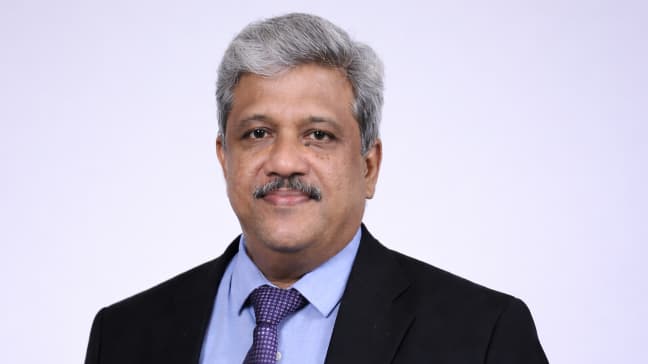
“The bank has been working to reorient and restructure its balance sheet to make it more retail-focused compared to the past. For many years, we were heavily skewed towards corporate lending, which came with its own challenges, including event risks and thin margins,” said Sony A, SGM & CIO, South Indian Bank.
As a result, dedicated verticals were set up around retail lending. While the traditional branch channel continues to act as the primary source of business, it has been complemented by creating parallel verticals. These include products such as vehicle loans, home loans, and personal loans. In addition to the branch channel, these verticals were also tasked with tapping non-branch channels.
Non-branch channels include direct sales agents, support teams, and similar distribution mechanisms. From a technology perspective, such a shift requires ensuring that the staff on the ground is adequately empowered, underwriters are provided with deeper insights, and customers receive a seamless, digital, and convenient experience. This became the core agenda behind a complete overhaul of the South Indian bank’s Loan Origination System (LOS), which serves as the backbone for most underwriting activities.
IT Revamp Leads To Growth In Unsecured Loan Portfolio
As part of this transformation, the bank established a new division called the Business Process Group. This unit was staffed with personnel drawn from multiple departments and was tasked with simplifying processes wherever possible, keeping customer experience and practical use cases at the centre. Traditionally, the loan origination system (LOS) platforms are designed to address every conceivable edge case, which often makes them bulky and complex.
“We decided instead to create distinct swim lanes—fast-track journeys for high-quality customers who align with our policies and for whom digital adoption can be maximised. The objective was faster request processing. For instance, in retail loans such as housing or vehicle loans, we aimed to enable in-principle sanctions within hours, if not minutes. With this objective, we focused on revamping the LOS for retail lending, and in parallel, for MSME lending, which is another key focus area for the bank,” informed Sony.
As a result, business teams can now generate new leads, push them through the system, and obtain in-principle sanctions quickly, allowing them to engage customers immediately and provide assurance to proceed with asset purchases.
A quick personal loan journey was also established, designed primarily for reasonably tech-savvy individuals who prefer to access personal loans through digital channels independently. It is referred to as a “Quick PL” journey, and has contributed significantly to the growth of our unsecured loan portfolio.
These initiatives collectively represent the work done on the technology front to improve and expand the bank’s asset-side business.
Tech Partnership Leads To Rs 1900 Cr Growth In Co-lending Book
On the payments stack, in 2025, South Indian Bank went live with a feature on UPI that allows users to substitute their biometric authentication for the PIN. “Earlier, UPI payments required users to enter a PIN. Now, payments can be authorised using a fingerprint or facial recognition, enhancing convenience and speed,” said Sony.
In 2024, the bank also set up a Strategic Alliances and Digital Business Unit, which has since become a significant contributor to overall business growth. This unit partners with regulated entities such as NBFCs for co-lending and with fintechs the asset-liability sides and other digital products.
On the liability side, the unit has partnered with a Bangalore based fintech called called Upswing, ensuring the bank’s presence across digital deposit marketplaces. South Indian bank has also partnered with fintechs for products such as loans against mutual funds: one with DhanLap and another with Case Platforms (formerly known as Smallcase).
“From virtually no co-lending exposure in 2024, the co-lending book has grown to ₹1,900 crore today,” said Sony. This growth is now contributing meaningfully to the bank’s overall loan portfolio. The entire co-lending portfolio is technology-driven, with all processes handled through APIs. This foundational API-led integration enables a steady and scalable flow of inorganic asset growth.
“Technology has not only helped ramp up business volumes but has also improved yields. The co-lending book is priced at a higher yield compared to other portfolios, as it follows a regulated entity (RE)-led model, where the bank and the NBFC typically operate under an 80:20 arrangement,” said Sony.
Cost Control By Building In-house IT Platforms
South Indian bank realised the importance of building technology powered by the engagement between the bank’s cross functional teams, but designed under the leadership of IT.
“This was a very strategic move in which I was personally involved,” said Sony. To ensure the bank gets rid from partner dependencies. Because the bank at the beginning of 2025 was dependent on few partners for developing the LOS. But over a period of time, the bank realized it's better to work on and manage the systems indigenously, provided it operates under a quality team. The concerned teams responded extraordinarily well after working for months together almost on a 24X7 basis, designing the bank’s first digital in-house LOS platform on retail for vehicle loans.
“We call it a ‘powerdrive’, and it has been a success story. It offers a digital journey. There's no piece of paper involved. The application processing time is very limited, because the underwriting happens using various embedded data sources. Moreover the development of the customer relationship management software has given considerable savings that runs into crores on an annual basis,” said Sony.
On the LOS side, platforms were developed in-house for affordable housing, personal loans. These steps are taken, keeping in mind the larger vision of having a competent in-house team that can develop software in a rapid manner.
The bank has also developed the CRM system in-house. It is the bedrock of all customer engagement and it is used by the branches, sales teams and customer engagement center. The cost of the CRM solution from the vendor was becoming prohibitive. Therefore, the in-house teams decided to develop a CRM solution, which contains lead management, case management, 360-degree view, in addition to other features. “The CRM is live now. We have seen approximately 50 percent uptick in usage and improvement in terms of lead sourcing and conversion. Additionally the software now provides the field staff with insights, unavailable in the earlier solution. The lead closures are measurable, and escalations can be done if there is any delay observed in a particular part of the country.”