
South Indian Bank (SIB) is increasingly embedding artificial intelligence (AI) into its operations as part of a broader digital transformation strategy. In its Q4FY26 results, the bank said AI capabilities are now live across multiple functions through ‘Zeni’, its proprietary in-house AI framework built on open-source architecture and supported by strategic technology partnerships.
The AI initiatives are being spearheaded by the bank’s dedicated AI Centre of Excellence and span areas such as productivity enhancement, customer experience, engineering, compliance, and risk management.
AI Use Cases at South Indian Bank
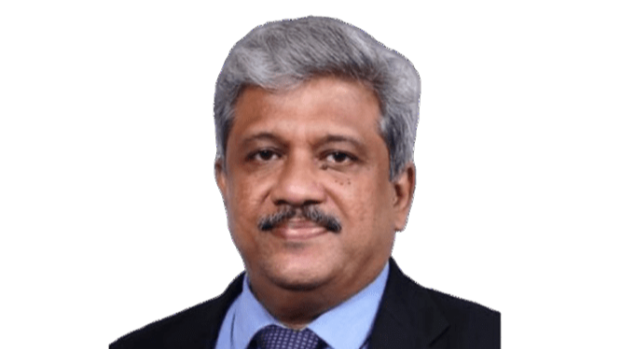
SIB has implemented AI largely in areas where decisions and processes can be clearly explained and justified. For example, “AI is used in operations for image matching, pattern recognition and face recognition," said Sony A, SGM & CIO, South Indian Bank speaking with FE FUTECH.
Among the key initiatives, the bank has deployed generative AI aimed at improving employee productivity and enabling faster access to institutional knowledge. It has also implemented Retrieval-Augmented Generation (RAG) systems, which allow employees to instantly search and retrieve information from internal documents, circulars, and policies. South Indian Bank has additionally launched a regulatory compliance chatbot that enables compliance teams to query regulatory guidelines conversationally, reducing manual effort and improving response times.
In the operational and governance functions, the bank has automated branch-level audit processes and reviews daily activity records using AI-driven day-book audits. In technology and engineering functions, AI-assisted coding agents are helping the bank accelerate application development, while agentic AI systems are being deployed for IT change governance and compliance review workflows. The bank has also introduced AI-assisted signature verification systems to improve authentication efficiency and deployed customer review and complaint intelligence tools to analyze customer feedback and strengthen service quality.
Measurable Returns From AI
South Indian Bank said its investments in AI, automation, and digital process transformation are also translating into measurable improvements in workforce productivity and branch efficiency. The bank reported a rise in both ‘business per employee’ and ‘business per branch’ in Q4FY26, indicating that employees and branches are generating higher volumes of business with improved operational efficiency.
The bank also highlighted rising digital transaction volumes, with 98.5% of total transactions now happening through digital channels, reducing pressure on physical branches and enabling staff to focus more on sales, relationship management, and customer acquisition, as per the company’s Q4FY26 results. This, combined with tighter cost management and technology-led operational efficiencies, has contributed to improved business productivity at both the employee and branch level.
Business per employee increased from Rs 20.4 crore in Q4FY25 to Rs 22.7 crore in Q4FY26, while business per branch rose from Rs 198 crore to Rs 216 crore during the same period, said the results announced by SIB. The bank attributed these gains to a combination of AI-driven process automation, centralized operations, digitized workflows, and stronger digital adoption among customers.
AI Roadmap
SIB is now working on projects to determine how much AI can be embedded into the customer journey. “The bank already has models that perform email-based analytics and is now extending these capabilities to the call centre as well, as the function becomes increasingly important to its digital banking strategy,” Sony said.
On the knowledge management side, the bank is currently working on AI-based solutions to help branches assimilate small language models (SLM) on top of the large language models (LLM) services available in the market. The aim is to provide in-house domain knowledge without actually hosting it on a general public infrastructure or a public LLM model,” said Sony.
Overall, it is a hybrid approach that is currently being implemented in select areas where the bank is first able to assure internal stakeholders that whatever is being done is explainable and ethical, before extending it to customer engagements and other use cases.