
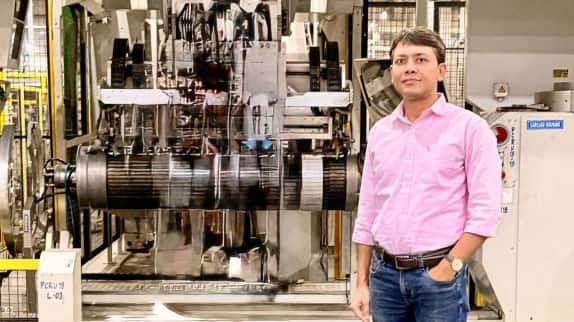
CEAT’s AI-powered intelligent mixing system, IntellAIMix, has helped the tyre manufacturer overcome challenges arising from changes in tyre compound formulations. The company has been able to reduce the time taken in formulation mixing, faster batch turnaround times and also slash energy consumption by using the AI solution.
The tyre industry is shifting toward high-performance, fuel-efficient products, with silica-based compounds rapidly replacing traditional carbon black in tyre formulations. While this transition boosts tyre performance, it also brings significantly higher complexity to the mixing process. IntellAIMix helped CEAT solve the following challenges: Mixing times began to stretch, batch-to-batch variability increased, and plants experienced capacity loss, ultimately impacting output and delivery performance.
IntellAIMix Keeps the System Within Optimal Limits
IntellAIMix implemented in FY25 addresses these challenges using advanced machine learning models and predictive controls. A key component of the solution is Model Predictive Control (MPC), which acts as a smart decision-maker in the control system, using future predictions to adjust actions and minimize errors while keeping the process within optimal limits.
By predicting the cycle time early in each manufacturing batch and proactively adjusting parameters such as rotor speed, ram pressure, and timing, IntellAIMix significantly reduces batch-to-batch variability and ensures a stable, consistent trajectory throughout the mixing process.
AI Reduced Mixing Cycle Time, Energy Consumption
The AI solution has shown positive results, “It has achieved an 18 percent improvement in mixing cycle time, delivering faster batches with no compromise on quality. At the same time, the system reduced energy consumption by 29 percent, a significant sustainability milestone for high-energy industrial operations. The overall mixer capacity saw a major uplift, directly strengthening CEAT’s ability to meet growing demand,” informed Debashish Roy, Chief Digital Transformation Officer (CDTO), CEAT.
Apart from operational efficiency, IntellAIMix drives a fundamental shift in mindset, encouraging teams to move from fixed recipes to data-driven process optimization. “It also significantly reduces process variability, especially by reducing variability in mixing time, leading to more consistent and predictable outcomes,” said Roy.
The solution represents a major advance in CEAT’s AI-driven manufacturing journey, strengthening performance, reliability, and operational responsiveness across its plants.
“IntellAIMix marks a milestone in CEAT’s digital journey, showcasing how engineering, AI, and process science can come together as practical, measurable, business‑transforming tools. As the industry continues to evolve, CEAT’s intelligent mixology platform stands as a model of how legacy manufacturing processes can be transformed through thoughtful innovation. With IntellAIMix, the future of tyre mixing isn’t just faster, it’s smarter,” says Roy.
IntellAIMix - The Technology Platform
IntellAIMix is built on an on-premise Operational Technology (OT) architecture. The ecosystem includes edge computing servers, Programmable Logic Controllers (PLCs) and a Python-based analytics application. Ignition is used for both the front-end and back-end orchestration. Communication between components occurs through REST APIs within the intranet, with all devices connected over TCP/IP Ethernet LAN inside the OT network. No external cloud dependency exists — everything is hosted and operated within the same secure on-premise network. Ignition is the industrial control platform that connects CEAT’s AI models to actual factory machines, acting as the real-time interface through which analytics insights are translated into automated actions on the shop floor. IoT is not directly involved; instead, industrial-grade sensors monitor critical machine parameters. These sensors are specifically designed and rated to operate reliably under the high-temperature and harsh conditions of compound mixing.
Roy faced several challenges en route to moving the project from proof of concept (POC) to production. “Safety implications are paramount. Therefore, ensuring machine and material safety was a major challenge, as mixing is a critical process where incorrect ramp-up could lead to fire hazards or equipment damage. Additionally proving the technology under real manufacturing constraints was a major hurdle. Some of the other challenges include validating tyre quality to ensure AI-driven outcomes matched or exceed laboratory test results; Integrating the AI system with existing automation so both operate within defined system limits; Managing change and gaining operator and stakeholder acceptance for a fundamentally new way of working,” says Roy.
“Looking ahead, CEAT plans to extend its AI footprint into manufacturing and quality functions in the second half of FY2025-26. This next phase aims to drive autonomous operations, enhance product quality, and improve profitability — aligning with CEAT’s broader premiumisation and efficiency goals.”