
As artificial intelligence reshapes the workplace, the role of HR is undergoing one of its biggest transformations. HR has evolved from being a record-keeping and compliance-driven function to becoming central to business strategy, workforce enablement, and AI-led organizational transformation.
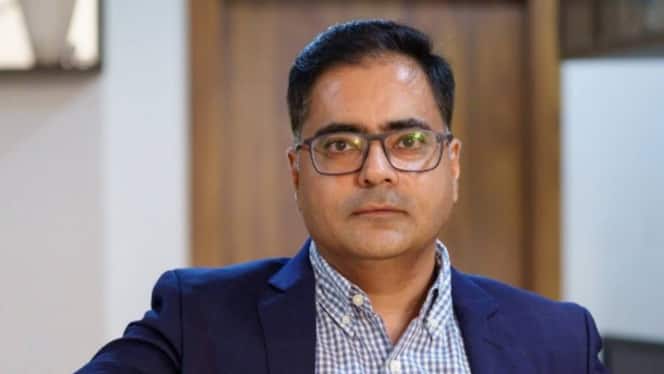
Speaking about the shift over the past decade, Shaakun Khanna, Head for AI and Leadership Transformation at SHRM India, said the transition first moved from compliance to employee experience during the SaaS and remote-working era, before entering the current AI-driven phase where organizations are redefining how work itself gets executed.
Khanna also highlighted that SHRM India recently released the ‘SHRM India Skill Intelligence Report 2026’, while continuing to work with enterprises on AI capability development, policy frameworks, and AI-enabled workplace ecosystems. Shaakun Khanna, Head for AI and Leadership Transformation, SHRM India speaks with FE FUTECH
Within HR, which sub-functions are seeing the maximum AI investments? Are companies still at the proof-of-concept stage or have they moved beyond that?
Three functions are at the top. Recruitment is number one. Number two is learning and development followed by performance management. Interestingly, AI adoption within HR is far higher across Asia-Pacific and India than in many other regions, which is an important trend we are seeing.
The POC stage got over about 12-18 months ago. Most organizations started experimenting after the big shift in 2023 when OpenAI launched ChatGPT and a series of other developments followed. About 63% of companies, according to our research, now have some live application of AI. These are at different stages of maturity, but most POCs are done.
Now organizations are moving from piecemeal POCs to creating end-to-end AI-enabled ecosystems where the whole experience is seamless. Eventually, you won’t even know which part of the process was handled by humans and which by AI.
Have companies started seeing ROI from these AI investments?
In pockets, yes. But most implementations are still in the design or deployment phase. I think we are about a year away from seeing concrete enterprise-level outcomes.
At a functional level, however, there are already many examples of measurable impact.
What about agentic AI? Are companies adopting it or are they still largely at the chatbot stage?
Agentic AI has picked up very well. In functions such as recruitment and employee self-service, a lot of work has already moved towards agentic AI.
The POCs have been quite successful, and actual transactions are happening now. This is still the initial stage, but over the next 18-24 months, a large part of operational HR — possibly as much as 60% — could move to AI agents.
Extensive work is happening in candidate matching. Recruitment remains the number one use case of AI in India. If you look at candidate sourcing, interview scheduling, and even assessments to an extent, a significant part of that work is already being done by agentic AI.
Having said that, human intelligence remains extremely important. Theoretically, you could automate everything, but practically that will not happen.
Are companies getting access to the right datasets for AI training?
Yes and no. Companies that are successful typically have mature datasets. During the SaaS transformation over the last 18 years, most enterprise datasets got integrated. Every organization has an application tracking system (ATS) with data, and those systems are connected to job boards and external platforms. So the foundational layer exists.
Organizations with clean and reliable data are far ahead in their ability to embrace agentic AI. Those without it are struggling and will continue to struggle.
What kinds of AI tools are currently seeing the highest adoption?
Currently, point solutions are dominating. We conducted research and found that HR as a function has 16 sub-functions and 72 nano-functions underneath them.
The adoption of AI and agentic AI is happening bottom-up. Organizations are picking individual nano-functions such as background verification, candidate matching, or assessments and applying AI there first. Over time, all of these will converge into one seamless experience.
When we talk about AI-enabled employee experiences, could AI eventually act like a workplace companion or assistant for employees?
Yes, for example, if an employee asks a generic AI assistant, they may get a generic response. But enterprises want context-specific answers aligned with their policies, training, and workflows.
For a very large airline, for example, we developed a tool where managers were trained on specific aspects of operations and people management. Later, when they faced challenges on the job floor, instead of getting a generic answer from a search engine or assistant, the tool could respond contextually.
It could say: “When you attended the training, this is what you were taught, and this is how you should apply it in this scenario.”
All of this happens in natural language. So we are not just enabling employees with skills or tools — we are giving them a companion that is always available.
This can apply in cross-cultural situations as well. Suppose somebody is working in the Netherlands and wants help navigating local workplace etiquette, communication styles, or cultural interactions. AI assistants can guide employees in real time.