
Max Healthcare has undertaken multiple AI initiatives. The healthcare chain has built a connecting layer between the legacy systems and the AI platforms to get instant AI inferences; An AI orchestration layer has also been formed, which provides a unified platform for doing data ingestion, MCP integrations and LLM gateways.
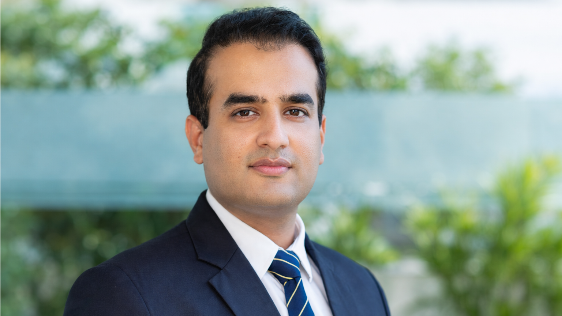
The results are now visible. In an interaction with FE FUTECH, Arjun Sharma, Director & Chief Digital Officer, Max Healthcare, says the most immediate and measurable value has been observed in patient engagement and operational efficiency.
Excerpts
Max Healthcare has rolled out several patient-facing digital tools, including the Max MyHealth platform. How do you ensure these products integrate seamlessly with hospital systems like EMR, billing and diagnostics while still delivering a consumer-grade digital experience?
Like most large hospital networks, we operate a mix of systems, some modern, some legacy infrastructure. A complete overhaul may seem like the ideal solution in theory, but at the scale at which Max Healthcare operates, it is neither practical nor advisable while continuing to serve millions of patients seamlessly in real time.
Our approach has been to adapt rather than replace, with a clear focus on ensuring that technology enhances patient access and outcomes without disrupting clinical continuity. We built what we call an adaptive MCP (Model Context Protocol) layer, which essentially acts as an intelligent translation layer between our legacy systems and our AI infrastructure. This platform can take virtually any existing API, regardless of how old or proprietary and render it AI-ready almost instantly, without disrupting the underlying systems that clinical and operational teams depend on daily.
We designed the digital ecosystem anchored on one non-negotiable design principle: every system of record stays sacrosanct and there is a single source of truth for every data domain. Digital apps pull directly from these core systems in real time, so what a patient sees on their screen—whether it’s a prescription, a lab report or an appointment—is always current and clinically reliable. This ensures that patients can access their health information seamlessly and make timely decisions, which is critical to improving outcomes.
Sitting above that is Max brAIn, our centralised AI orchestration platform. It manages our LLM gateways, MCP integrations and data ingestion pipelines from a single unified layer. This architecture allows our product teams to build intuitive, consumer-grade digital experiences—the kind patients expect—while ensuring these experiences are deeply integrated with clinical workflows. It enables us to move quickly to improve patient engagement and accessibility, without compromising stability or care delivery.
Where is Max Healthcare currently seeing the most tangible value from AI — clinical decision support, operational efficiency, or patient engagement — and what guardrails are in place to manage clinical risk?
AI is beginning to touch nearly every vertical of the clinical flow, but we are seeing the most immediate and measurable value in patient engagement and operational efficiency today, with clinical decision support firmly in our near-term roadmap.
A good illustration is our appointment request bot. Rather than simply automating bookings, it intelligently identifies alternative slots if a patient's preferred time is unavailable and escalates to a human agent when no automated resolution is possible. This helps reduce delays in accessing care, ensuring patients are able to reach the right service faster.
Our AI Symptom Search feature has been particularly impactful. Patients who know their symptoms but are unsure which specialist to consult can simply describe what they are experiencing and our system—powered by proprietary algorithms and large language models—maps those symptoms to the appropriate specialty. Critically, we support over 20 Indian languages and dialects, because we believe that language should never be a barrier to accessing the right care. This is especially important in improving accessibility and early intervention.
We are currently in controlled testing for AI applications in clinical workflows: discharge summary generation, longitudinal patient journey management and radiology support, among others. In clinical workflows, our pace is intentionally measured. We operate with the philosophy that "We cannot afford to move fast at the cost of getting things wrong." Every AI use case undergoes rigorous testing across multiple environments before any deployment and clinical oversight remains non-negotiable at each stage. This ensures that technology strengthens care delivery without introducing risk.
Remote monitoring has emerged as an important extension of hospital care. How does Max Healthcare integrate data from home-based medical devices into its clinical workflow and what challenges have you encountered in making such data actionable for physicians?
The majority of consumer wearables—smartwatches, rings, fitness trackers—carry no formal clinical certification. Their manufacturers are transparent about this: these devices are designed to offer users a broad sense of their vitals, not to serve as diagnostic instruments. Treating consumer-grade biometric data as clinically equivalent to regulated medical device output would be a serious category error.
That said, we recognise that wearable data, when contextualised correctly, can offer genuine longitudinal value, particularly for chronic disease management and post-discharge monitoring—areas that are critical to improving long-term patient outcomes. We are therefore developing features within Max MyHealth that will allow patients to connect their personal health wearables to our platform. Once synced, the data will be interpreted not in isolation, but in the context of each patient's verified medical history, generating personalised, clinically grounded insights on improving health outcomes over time.
The core challenge we are working to solve is the gap between raw device data and actionable clinical intelligence. We are investing in the algorithms and validation frameworks needed to bridge that gap responsibly, ensuring that what reaches a physician is signal, not noise. This is essential to making remote monitoring a meaningful extension of care, rather than just a data layer.
Healthcare systems often struggle with fragmented data across hospitals, labs and external platforms. What architectural or standards-based approach is Max Healthcare adopting to ensure interoperability across its digital ecosystem?
Data interoperability is one of the most significant long-term investments we have made at Max Healthcare, because it directly impacts continuity of care and patient outcomes. It began with a foundational decision, made well before the current AI wave—a centralized, cloud-native data lake. All patient data is aggregated centrally, with PII handled through pseudonymisation, ensuring that it cannot be traced back to an individual patient unless access is explicitly authorised through the governance framework.
However, aggregation alone does not solve interoperability. The harder problem is ensuring that data from fundamentally different systems—each with its own schema, vocabulary and structure—can be unified without losing clinical fidelity. This is where the single-source-of-truth architecture becomes critical. Legacy systems remain the authoritative systems for their respective domains. The data lake ingests from these systems but never replaces them. What flows into the lake is structured, governed and traceable back to its system of origin, ensuring accuracy when used for clinical or AI-driven insights.
This architectural discipline also shaped how we addressed a key patient-facing issue—duplicate patient identities. Max Healthcare introduced a Merge ID capability that allows patients to consolidate their multiple IDs into a single primary identity and access their complete health history through digital applications. This improves continuity of care while maintaining compliance, as historical records remain untouched.
Another solution addresses a uniquely Indian challenge—families registering multiple members under a single phone number. Our One Patient One Phone Number framework allows the primary profile holder to assign alternate verified login numbers to individual family members, giving each person independent access to their own records, appointments, lab bookings and at-home services. This significantly improves accessibility while retaining a unified family view.
On the standards front, Max Healthcare has developed one of the first benchmarks for ICD-11 medical coding in the world. ICD-11 represents the global gold standard for clinical data classification and building towards it is central to making clinical data interoperable, AI-ready and globally relevant. Structured data is foundational to improving outcomes.
More broadly, Max Healthcare operates as a cloud-native organisation in active transition to becoming an AI-first organisation. This means we are re-examining every data workflow and integration point through the lens of how it can generate intelligence that improves patient care and accessibility.
How does Max Healthcare measure the success of its digital initiatives, whether through patient outcomes, operational efficiency, revenue contribution, or patient experience metrics?
Our north star is straightforward: how meaningfully have we improved the experience of a patient who needs us?
We are deeply conscious that patients interact with healthcare systems at moments of vulnerability and stress. Against that backdrop, reducing friction is not a convenience feature—it directly impacts access to timely care and, in many cases, outcomes. Every digital initiative we build is evaluated against this lens: does it make the patient’s journey simpler, faster, or more accessible?
That manifests across a range of products. AI Symptom Search helps patients navigate to the right care without uncertainty, enabling earlier intervention. One Patient One Phone Number removes dependency barriers within families and improves access. Our Pre-OPD AI Assessment—an AI nurse that takes structured notes before a patient’s outpatient consultation—reduces time in-clinic and allows physicians to begin consultations better prepared, improving the quality of interaction.
Operationally, we track adoption rates, task completion rates, reduction in manual intervention and time-to-resolution across digital touchpoints. But beyond efficiency, we increasingly look at how these interventions improve continuity of care and patient engagement across the treatment journey.
Ultimately, the metric that drives every decision is whether we are making healthcare more accessible, more responsive and more effective for our patients.