
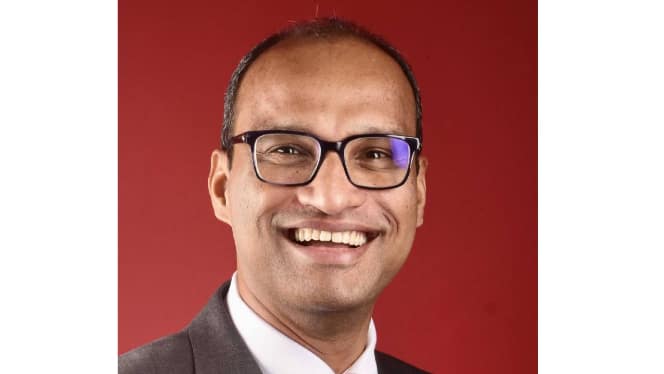
DBS Bank has built a robust data foundation to power its analytics and AI models. Named after Alan Turing, the AI system ALAN incorporates all the essential components required to manage the AI model lifecycle and has been embedded across processes such as customer service, operations, and risk management. The system has proven beneficial for both internal operations and customer experience. FE FUTECH speaks with Ramesh Mallya, Chief Technology Officer, DBS Bank India.
How is DBS Bank India leveraging data and analytics to drive more personalised and intuitive customer journeys?
DBS Bank India relies on data at every decision point, from identifying growth segments and customer acquisition strategies to pricing, product propositions and performance optimisation.
AI and analytics are anchored on in-house platforms such as ADA (Advancing DBS with Analytics), which ensures data quality, governance and discoverability, and ALAN, a proprietary AI system named in honour of Alan Turing, who is considered the father of theoretical computer science and AI. ALAN embeds approval and governance controls throughout the model lifecycle. Data quality dashboards and a dedicated data management function further ensures accuracy and responsible use. This foundation allows DBS Bank India to deliver real-time insights, tailored recommendations and contextual customer experiences.
How is AI being integrated into your technology ecosystem today, and where are you seeing the most meaningful impact so far?
AI is deeply embedded across DBS Bank India’s technology ecosystem, spanning customer service, operations, risk management and employee productivity. The bank has implemented multiple GenAI use cases across functions, with all models monitored for accuracy, risk and model drift.
In operations, AI-powered tools such as the Processing Co-Pilot have reduced manual data entry, improved processing speed and saved significant time for branch staff, allowing employees to focus on higher-value work.
More than two-thirds of DBS Bank India employees now use GenAI tools regularly. The most meaningful impact lies in how AI improves efficiency and responsiveness while reinforcing DBS’s ambition to be an AI-enabled bank with a heart, blending machine intelligence with human empathy.
How is technology strengthening capabilities in areas like treasury and markets, particularly in improving speed, efficiency and client experience?
Technology has significantly strengthened DBS Bank India’s treasury and markets capabilities by improving speed, precision and transparency. The bank has invested in analytics and machine learning to process large volumes of market data more efficiently, enabling faster execution, better risk management and more informed decision-making.
Teams also use DBS GPT, the bank’s internal GenAI-powered assistant, deployed on top of internal product, policy and market research knowledge bases. This has improved productivity by providing quicker access to information, richer synthesis of insights and enhanced decision support. AI-driven analytics further help to analyse trade patterns and flows, allowing proactive and data-backed recommendations for clients.
What are some of the recent digital initiatives focused on enhancing customer experience across the bank?
DBS Bank India has been steadily deepening its digital capabilities, with a strong focus on improving the customer experience. Over the years, the bank has made investments in building a solid data foundation and fostering a culture of experimentation. This has enabled teams to adopt advanced technologies, including AI, in a responsible and scalable way.
A key driver of this transformation has been platforms such as ADA (Advancing DBS with Analytics), which ensure that insights and models are built on high-quality, well-governed data. These capabilities help the bank to personalise customer journeys, deliver faster and more seamless service, strengthen risk and credit decisions, and identify new growth opportunities across both retail and corporate banking.
At the same time, DBS Bank India has digitised several end-to-end processes. Increased automation and reduced manual intervention have significantly cut turnaround times, while also freeing up employees to focus more on innovation and initiatives that truly enhance the customer experience.
By combining strong technology and data foundations with a deep understanding of customer needs, the bank continues to deliver better outcomes for customers while creating long-term value for the business.
How are you approaching core modernisation while ensuring a seamless customer experience and operational resilience?
Core modernisation at DBS Bank India is undertaken incrementally to ensure continuity of service. Legacy systems are progressively decomposed into smaller, modular services that can be modernised independently. This allows new capabilities to be introduced in a controlled manner and to be rigorously tested.
Strong DevOps practices support this approach, with automation across testing, deployment and monitoring. Continuous monitoring, including predictive and anomaly-detection capabilities, helps to identify and address potential issues early. At every stage, resilience is reinforced through built-in redundancy, strong security controls and phased roll-outs.
As CTO, what are your key focus areas when it comes to driving innovation while ensuring resilience and scalability?
My focus areas centre on three priorities. The first is fostering a culture of continuous learning and experimentation, where teams are encouraged to explore new technologies and ways of working.
The second is building robust, cloud-agnostic architectures that can scale rapidly to meet growing demand without compromising performance or resilience.
The third priority is strong governance and cyber security. Innovation must always be balanced with the highest standards of security, transparency and ethical use of data. This ensures that every new capability enhances customer value while maintaining trust and operational stability.