In volatile environments, whether triggered by geopolitical developments or macroeconomic events, the ability to rapidly provision resources and isolate workloads becomes critical, says Shrini Viswanath, Co-founder and CTO, Upstox.
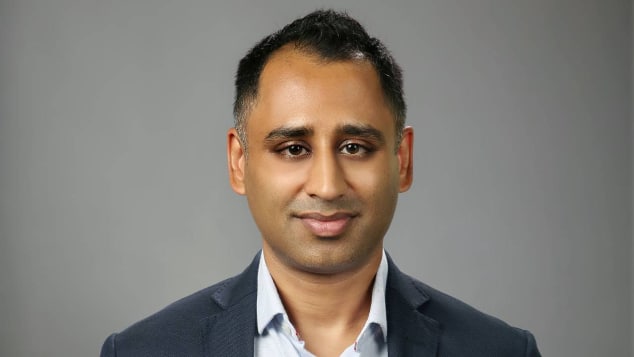
Shrini Viswanath, Co-founder and CTO, Upstox
The conflict in West Asia has rattled markets, leading to heightened turbulence in daily movements across asset classes. This requires robust preparedness in the trading platforms provided by brokerage houses.
FE FUTECH speaks to Shrini Viswanath, Co-founder and CTO, Upstox on how the company has implemented a containerised infrastructure which facilitates dynamic scaling during market volatility. Additionally, the brokerage has strengthened its security infrastructure, as market uncertainties also provide a perfect setup for threat actors to probe the IT infrastructure to search for loopholes and infiltrate.
With geopolitical tensions from the ongoing conflicts in West Asia to global market volatility—trading platforms often face sudden spikes in activity. How has containerisation helped Upstox ensure resilience and rapid scalability of its infrastructure during such unpredictable market events?
At Upstox, we’ve invested heavily in a containerised infrastructure that allows our systems to scale dynamically during periods of heightened market activity. In volatile environments, whether triggered by geopolitical developments or macroeconomic events, the ability to rapidly provision resources and isolate workloads becomes critical.
Containerisation enables us to deploy updates faster, maintain service stability and manage traffic surges more efficiently. This architecture also helps our engineering teams respond quickly to changing conditions without disrupting the overall platform. Ultimately, it allows us to ensure that traders continue to experience reliable performance even during the most unpredictable market moments.
As far as cyber threats are concerned, what kind of environment do you foresee, especially during a tense geopolitical situation that is fast unfolding?
During periods of geopolitical tension, technology-driven stock-broking platforms face a more dynamic cyber-risk landscape. Sophisticated threat actors often increase probing of financial infrastructure, APIs, cloud environments, and identity systems, while phishing campaigns, credential-abuse attempts, and efforts to exploit latency-sensitive trading platforms tend to rise.
To address these risks, we rely on deep telemetry, real-time anomaly detection, and a zero-trust security architecture across our environment. Our security operations leverage centralized monitoring through SIEM platforms and automated response via SOAR to rapidly detect and contain suspicious activity. Continuous red-teaming, penetration testing, and proactive threat hunting further strengthen our defenses. The platform operates on resilient multi-region cloud infrastructure with DDoS mitigation, strong API security, web application firewalls, and layered network protections. Combined with multi-factor authentication and robust fraud-prevention controls, these measures help ensure secure operations and uninterrupted market access for investors.
As the conflict rages on in West Asia, is there a possibility of any learnings from the Covid times, (the last major disruption faced) that you plan to implement, should the situation reach the kind of severity that you might have visualised ?
The Covid period was an important stress test for digital platforms across the financial ecosystem. One of the key learnings for us was the importance of preparing for demand scenarios that go far beyond typical forecasts. During that time, we strengthened our infrastructure planning, improved monitoring capabilities, and built more robust response frameworks across teams. Those learnings continue to inform how we think about resilience today. While geopolitical developments are inherently unpredictable, the experience from Covid has helped us institutionalise a mindset of preparedness ensuring that both our systems and teams are equipped to respond swiftly if market activity intensifies.
With the tensions in West Asia, what kind of negotiations do you expect with the vendors, partners, and internal employees to achieve a state of extreme preparedness from a resilience standpoint ?
Resilience is rarely achieved in isolation; it requires close coordination across technology partners, infrastructure providers, and internal teams.
At Upstox, we maintain ongoing conversations with our vendors and partners to ensure alignment around capacity planning, redundancy, and response protocols. Internally, our engineering and operations teams regularly review contingency scenarios and conduct readiness checks so that we can respond effectively to sudden market movements. The goal is to create a shared state of preparedness across the ecosystem, where every stakeholder understands their role in maintaining platform stability and continuity for our users.
How have you charted your artificial intelligence (AI) strategy?
Our AI strategy is focused on making investing simpler, more intelligent, and more accessible for every Indian investor. We see AI not just as a technology layer but as a way to fundamentally improve how users discover opportunities, make decisions, and manage risk.
At a strategic level, our AI roadmap focuses on three pillars:
Intelligence for investors: Helping users understand markets faster through AI-driven insights, alerts and contextual information.
Personalisation at scale: Using AI to tailor the platform experience for each investor based on their behaviour, portfolio and interests.
Operational efficiency: Leveraging AI internally to improve customer support and platform efficiency.
Our approach has been to build AI capabilities gradually and responsibly, ensuring that the technology enhances investor decision-making while maintaining transparency and trust.
What have you already launched?
We have begun integrating AI-driven capabilities across the platform in several ways. These include:
Smart alerts and insights: We provide contextual alerts such as price movements, portfolio performance updates, and market triggers that help investors stay informed and act quickly.
Enhanced support and assistance: AI is also being used to improve the customer experience through faster query resolution and smarter help systems.
These initiatives are aimed at reducing information overload and helping investors focus on what matters most.
What are you currently testing?
We are currently experimenting with several AI-driven capabilities that will further enhance the investing experience. All these experiments are being developed with a strong emphasis on responsible AI usage and maintaining investor control over decisions.
How have you prepared the data strategy for rolling out AI?
A strong AI strategy requires a strong data foundation. Over the past few years, we have invested significantly in building scalable data infrastructure and real-time analytics capabilities that allow us to process large volumes of market and platform data efficiently.
Equally important for us is ensuring data privacy and security, so our systems are designed with strict safeguards while enabling us to deliver faster insights and more personalised experiences to users.
Empower your business. Get practical tips, market insights, and growth strategies delivered to your inbox
By continuing you agree to our Privacy Policy & Terms & Conditions