
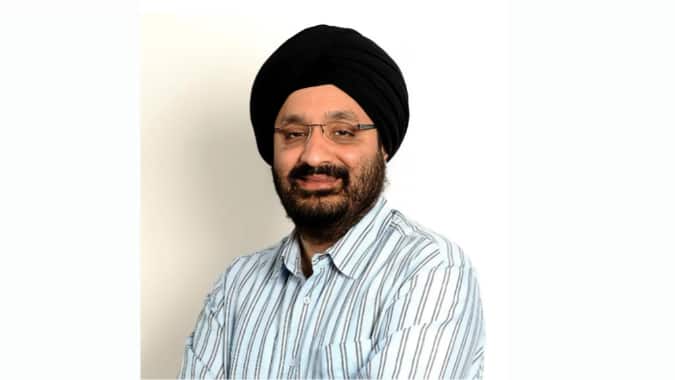
In an interview with Jaspreet Bindra, co-founder and CEO of AI & Beyond, he highlights that the adoption of AI technology should involve not only hype but also practical applications of powerful data that can help solve genuine business problems. In his opinion, AI is often held responsible for job displacement; however, the real reason is that people are not prepared for the shift, nor do they have enough job opportunities. For the future, Bindra sees the competitive advantage in leaders who combine AI with common sense, curiosity, and domain knowledge.
Q: How should organisations approach AI adoption today?
Jaspreet Bindra: There is no clear answer; this will depend on the industry, the size of the organisation, and its technological maturity. One of the main challenges is the issue of data availability. The majority of organisations suffer from poor data management as their data is fragmented, duplicated, or improperly stored.
Furthermore, there is an emphasis on the appeal of AI without addressing the problem in the data first. Other issues that must be taken into account include regulation and good investments, rather than reactive actions to pressure.
At the very least, AI should be treated as electricity – as a means to address specific problems rather than an innovation per se. So, the first step to AI implementation should be business problem identification, followed by selection of technology.
Q: Are AI-driven layoffs a real concern?
Jaspreet Bindra: Things are not so simple. There are many layoffs that are being attributed to AI that actually have nothing to do with AI. Many tech companies had hired too many personnel during the pandemic due to growing demand and ultra-low interest rates, making their business model unsustainable and resulting in mass layoffs. This has happened at many companies, including Oracle, where poor business performance played its part.
That said, it would be incorrect to say AI has no impact at all. A small portion of job cuts can be attributed to automation, particularly in roles where tasks are easily replicable. But broadly, what we are seeing today is a mix of economic correction and what can be called ‘AI washing,’ where AI is being used as a blanket justification for decisions driven by other factors.
Q: Will AI lead to job losses or job creation?
Jaspreet Bindra: It is going to do both for us, just as each significant technological revolution has done throughout history. Each technological revolution has brought a certain percentage of jobs to disappear from the job market, and the same is true for Artificial Intelligence. This process has begun to happen, especially for entry-level jobs, since most of those tasks can be easily replaced by AI technology. But this is just one side of the coin; there are going to be jobs that did not exist before AI.
Look back in time. When computers were introduced, there were fears of mass unemployment, but what happened in reality? There were several more new industries born as a result, and there have been far greater job opportunities, especially in countries like India.
Q: How should organisations respond to workforce disruption?
Jaspreet Bindra: Attention should be placed on the protection of people rather than that of jobs. Job disruption is bound to happen with any kind of technological advancement. However, the issue at hand should be to make sure people adapt through the process. Reskilling and becoming literate in AI would be key steps in this case. Although many companies are now paying large amounts of money to train their staff, the problem here lies in the incorrect approach to it. The approach is often considered to be one-time only, just like with a particular software.
Finally, there seems to be a mismatch between training investments and results. While the former is considerable, employees do not fully engage themselves in the learning process; they are being brought to the “water”, but it takes much more than that. People need to make efforts to learn continuously and evolve, thus becoming literate in AI. All in all, although organisations can facilitate this process, people will ultimately have to assume responsibility for it.
Q: Is AI the biggest reason behind job challenges in India?
Jaspreet Bindra: Not at all. This problem has nothing to do with AI. The reality in India is that we simply lack jobs in the manufacturing sector. On the contrary, we see that most of the new positions created are in the area of services and freelance work. And here is the catch. Precisely those areas are the ones most threatened by AI since this innovation deals mostly with cognitive and intellectual labour.
On the other hand, developing economies that managed to boost manufacturing managed to create much more robust job systems, as these sectors have much lower risks associated with AI implementation. This means that the problem is not just about adaptation to changes introduced by artificial intelligence, but also lies in the nature of the jobs we offer.
Q: Which types of jobs are likely to thrive in the AI era?
Jaspreet Bindra: The type of employment that involves practical activity and physical execution is unlikely to suffer from the impact of AI. These include industries such as manufacturing, construction, farming, mining, and engineering professions. A third category is what can be termed ‘jobs of the heart,’ which involve emotional and human contact, such as nursing, senior care, and teaching younger children, where human engagement is indispensable.
Jobs requiring blue-collar labour will continue to be valuable despite the poor status of the occupation in India. In other nations, blue-collar workers receive high remuneration and prestige, and this will come into play soon enough. Moreover, jobs that require extensive expertise in their respective fields, combined with AI, will be sought after. The application of AI technology increases efficiency while the experience of the employee provides the necessary context. Therefore, the occupations that will prevail are those that demand human skill, judgment, and practicality.
Q: How can organisations ensure ethical use of AI?
Jaspreet Bindra: Completely ethical usage of AI is very challenging. It requires careful consideration of what is acceptable and not. Similar to other powerful technologies, AI also has its benefits and downsides. Like with any other technology, society develops guidelines that help maximize the positive effects and minimize any risks. However, some risks will remain.
Companies that want to ensure ethical usage of their AI should develop certain guidelines. They need to create policies that will define what is allowed and what should not be done, and they should follow regulatory requirements that are developed by the government. Many companies are now developing policies and principles of ethical AI usage, but this will not be enough. The key here is the creation of a sufficient knowledge base about AI within the company, i.e., AI literacy should be ensured among employees.
Q: Can India emerge as a global AI leader?
Jaspreet Bindra: India’s chances of being able to compete with the likes of the US and China in terms of developing artificial intelligence would be quite slim due to the sheer amount of technology and resources that they have invested, and the lead that they have on other nations. But this does not mean that India will not be able to take the lead in some way, just that it should do so through a somewhat unique manner.
It would be more ideal for India to use what could be considered a ‘third way’ approach to artificial intelligence. That would be in terms of creating a more democratised version of artificial intelligence technology, one which India has shown it could accomplish in the development of digital infrastructure across the nation. In this case, it would involve using the same kind of approach in artificial intelligence that would benefit India’s population.
Q: What human skills will matter most in an AI-driven world?
Jaspreet Bindra: As technology advances, it becomes important for humans to possess unique traits. Traits such as curiosity and judgement would be vital since they are hard to simulate using artificial intelligence. Critical thinking skills, which involve questioning and making informed decisions, would be essential. Effective communication skills would be necessary, particularly the proficiency in handling language, because interaction with AI is based on language use.
Apart from those, other skills such as teamwork, empathy, and interpersonal relations would be crucial. For a long time, areas such as the humanities have been neglected in favour of technical areas, but now things are changing. In the future, humanistic attributes, which involve thinking, expressing, and relating, would be vital.