
With a portfolio spanning Ayurvedic healthcare, personal care, home care and foods, Dabur India is positioning Artificial Intelligence as a cross-functional business enabler rather than a standalone technology initiative. The company, which operates a wide manufacturing network across India, employs thousands of people and manages a large ecosystem involving farmers, distributors, retailers, is now using AI to create interconnected workflows across its business functions.
The FMCG major, which reported consolidated revenue of over Rs 12,000 crore in FY25, operates a distribution network of over 7.9 million retail outlets across 1,22,000 villages. Dabur has engaged around 9,653 farmers in herb cultivation and collection, and another 11,220 farmers in beekeeping activities, according to its annual report disclosures.
Boardroom Backing
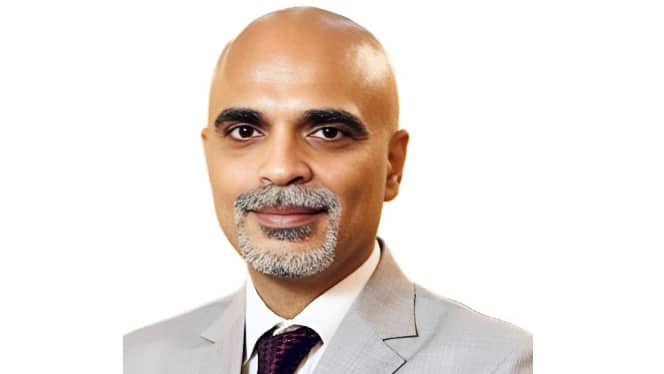
Manas Mehra, Global CIO, Dabur India Limited speaking at a media interaction organised by Accenture, said AI has helped improve forecasting accuracy, optimise procurement and inventory management, sharpen marketing campaigns and enhance employee productivity at Dabur. According to Mehra, “early AI-led use cases are already showing productivity improvements in the range of 10% to 20% across functions.”
At the core of Dabur’s AI strategy is a boardroom-backed vision to shift from retrospective decision-making to proactive and predictive management. “The company has built function-wise AI charters and interconnected roadmaps aimed at enabling business teams to leverage data-driven insights in real time. Alongside technology deployment, Dabur is also focusing heavily on AI adoption and culture-building, embedding AI tools into daily workflows and positioning them as “digital colleagues” rather than replacement technologies,” said Mehra.
AI Moves From Boardroom Conversations to Business Functions
Dabur’s diversified FMCG portfolio, rooted in its Ayurvedic heritage, involves multiple stakeholders across the value chain. From farmers and procurement teams to operations, sales and marketing, the company manages a large and interconnected ecosystem. At the consumer end as well, the company caters to varied demographic segments including Gen Z and millennials.
Against this backdrop, AI quickly emerged as a strategic discussion point within the organisation. “The conversations were not limited to experimentation with technology, but focused on how AI could drive transformation across multiple real-time business scenarios.”
AI has also democratised the decision-making process internally. Discussions around AI use cases increasingly began emerging from across teams, influenced by growing awareness around AI tools and their applications in both personal and professional contexts.”
Once the organisational buy-in for AI was secured, Dabur focused on establishing the right guardrails and strategic priorities to guide its AI transformation journey. The company’s objective was to move beyond relying solely on historical analysis and instead leverage AI and data capabilities to make predictive and forward-looking business decisions.
The vision, according to Mehra, was to deploy AI at the business-function level to help Dabur operate more effectively in a competitive FMCG environment while unlocking measurable value and KPI improvements for stakeholders.
Building Interconnected AI Workflows Across Supply Chain, Sales and Marketing
Dabur has developed interconnected AI charters and roadmaps across functions. The company says the idea is to ensure that decisions taken in one function directly support outcomes in another.
For example, “AI-driven forecasting tools are being used to help supply chain teams generate more accurate and agile forecasts based on prevailing market trends. These insights then flow into operations and procurement planning, enabling teams to source the appropriate quantity of raw materials. The resulting inventory visibility also helps sales teams align product availability with market demand.
At the same time, marketing teams are using AI-led intelligence to create modular and targeted messaging strategies tailored to different customer cohorts and geographies instead of relying on broad-based campaigns.”
Dabur believes that a strong data foundation is critical for deriving meaningful AI outcomes. “Static dashboards alone are no longer sufficient in a rapidly changing market environment. Instead, stakeholders across functions are being equipped with predictive and descriptive insights from the planning stage itself,” said Mehra.
One example involves AI-based tools helping sales teams identify which products are likely to perform better in specific pin codes based on prevailing trends and market signals. Marketing teams are also being provided with intelligence related to competitor messaging strategies to improve campaign effectiveness.
Moreover these data and insight layers are continuously reviewed by stakeholders against past planning and decision-making outcomes, enabling management teams to refine future strategies. Mehra describes this evolving operating model as a “360-degree” way of working where business decisions increasingly become AI-driven across functions.
Driving AI Adoption Through Culture and Workflow Integration
Despite the technology advancements, Dabur says the larger challenge remains around culture and adoption. According to Mehra, the success of any enterprise technology initiative ultimately depends on the level of adoption within the organisation.
To address this, Dabur has been working with departments across the company to create an AI-oriented culture. Since business units are at different stages of AI awareness and maturity, the company has focused on making AI adoption as seamless and invisible as possible within employee workflows. The objective is to position AI as an enabling layer rather than as a replacement for existing systems or jobs.
As part of this effort, the IT teams under the leadership of Mehra have developed in-house large language model platforms such as DaburGPT. “Initially, these tools were introduced to help employees automate mundane and time-consuming tasks including Excel analysis and PowerPoint creation.
This approach is helping employees become comfortable with AI tools as part of their daily work routines rather than viewing AI as a standalone technology concept. Once employees become accustomed to using AI for personal productivity tasks, the organisation gradually introduces them to more detailed business workflows powered by AI,” said Mehra.
The broader cultural shift underway is aimed at enabling employees across functions to offload repetitive non-core activities while focusing more on achieving their core business KPIs.
On the skilling front, Dabur has implemented tracking mechanisms to monitor AI usage and employee progress as part of structured training programmes.
As Dabur scales AI, it is reinventing talent and culture alongside technology combining its Ayurvedic heritage with a modern, data‑first approach and investing in a digitally ready workforce. Initiatives include gamified learning programs, LinkedIn‑based digital academies, and immersive ‘AI Horizon’ workshops for leadership teams and cross‑functional managers.
“While the productivity impact may vary across functions, the AI-led use cases being deployed are already delivering promising results, with productivity improvements in the range of 10% to 20% emerging as an early trend across the organisation,” said Mehra.